 הזדהות מורה / תלמיד משרד החינוך
Wow! I remember the first time I held a smart-card wallet — thin as a credit card, cool metal edge, and my brain immediately raced. It felt like a physical manifestation of a private key rather than a scribbled seed phrase on a Post-it. Seriously? Yes. At first it seemed like a gimmick. Then my instinct said: this could actually change how regular people hold crypto. Initially I thought hardware wallets were only for nerds and traders, but then I realized cards solve practical problems that devices and paper don't.
Here's the thing. People want convenience. They want security. They don't want long mnemonic phrases or complicated firmware updates. Smart-card wallets, a subclass of hardware wallets, pair tamper-resistant secure elements with the form factor we already trust — the card. They use NFC or contact interfaces to sign transactions. That small change matters a lot. On one hand, you get a durable, pocketable object. Though actually, on the other hand, the security model is stricter: the private key never leaves the secure chip. No seed phrase floating around, no accidental backup copies unless you choose to create them.
Look — I won't pretend it's perfect. I'm biased toward tools that minimize user error. This part bugs me about so many products: designers add layers of choices and expect people to make the right ones. Smart-card wallets force a simpler mental model. You tap. You confirm. You feel done. But there are tradeoffs. For example, recovery strategies differ, and that can confuse people who are used to writing down a 12-word phrase. I'm not 100% sure every user will adapt easily, but most do quicker than you'd think.
Security architecture matters. Smart-card wallets typically use a secure element (SE) — a hardened chip designed to resist physical and logical attacks. Transactions are sent to the chip, signed inside the chip, and only the signed transaction leaves. No private key export. No keyboard entry of seeds. This reduces attack surface. Hmm… that sounds obvious, but it's a big deal in practice. If you drop the card in a taxi, the attacker still needs the PIN and typically a second factor (phone confirmation), depending on the implementation.
Practical differences you care about: usability, durability, and risk profile. Usability: these cards often use NFC and companion mobile apps. Tap the card with your phone, approve the operation, and done. Durable: cards survive being in a wallet pocket, and many are water- and scratch-resistant. Risk profile: losing the card is different than losing a seed phrase. You can brick or wipe a card remotely in some ecosystems (if you pre-configure settings), or you can rely on a backup card. There's nuance here — and some of it is subtle.
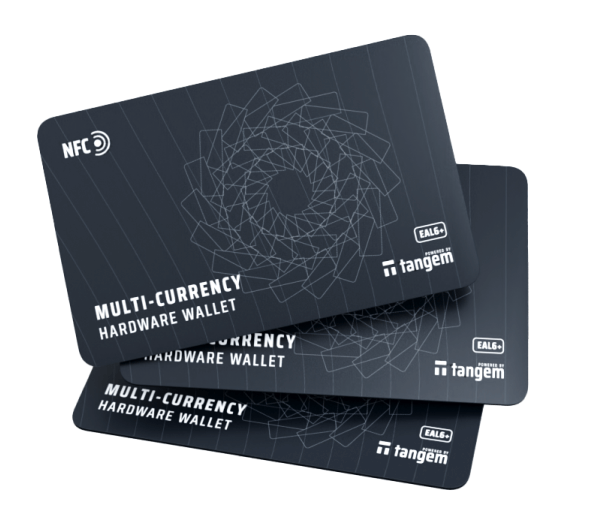
A practical take — how to use a smart-card wallet safely (and where they shine)
Okay, so check this out — the best practice is simple but often ignored: treat your smart-card wallet as you would a high-value physical key. Store a backup strategy. Label backups. Test recovery once. Many people skip testing and then regret it. My practical workflow looks like this: buy two cards, initialize them together, keep one in a safe (bank safe-deposit, home safe — your call), and carry the other. That way, if one fails or is lost, you have a truly air-gapped recovery without exposing mnemonic phrases. For users who want to explore this category, see this concise overview of a mature solution: https://sites.google.com/cryptowalletuk.com/tangem-hardware-wallet/
Why Tangem and similar products resonate: they lean into the card form factor and hide complexity. You don't need to understand hierarchical deterministic key derivation to use them day-to-day. That makes on-boarding less painful for mainstream users. But let me be clear — that convenience demands careful onboarding design from the manufacturer. If the maker skims the recovery UX, the user may be exposed. So, not all cards are created equal. Pick one with transparent recovery documentation and active firmware maintenance, and check for independent security audits.
I've seen three common user mistakes. First, treating the backup card like a spare credit card and leaving it in a wallet that’s always with them. Bad idea. Second, neglecting firmware updates because the app nags them — which is complicated because updates should be done cautiously, with clear verification. Third, thinking physical robustness equals invulnerability. Cards resist drops; they don't resist determined chip-off attacks forever. That said, for most people, cards materially raise the bar over plain software wallets.
On the topic of attacks: remote attacks are harder. Social engineering still works. Phishing will always be a threat. But because the signing happens on the card, attackers can't trick a user into revealing a private key that doesn't exist outside the secure element. If an app asks for your seed — red flag. If the card asks you to confirm a transaction hash on-screen (some cards support small displays), that's even better. The industry is moving toward better transaction visualization to fight these attacks.
(oh, and by the way…) If you're a developer or wallet integrator, smart-card wallets present an interesting API challenge. You need to design for intermittent NFC connectivity, user session timeouts, and clear error states. It changes assumptions about speed and feedback loops. I learned that the hard way while testing prototypes — sometimes the app shows a spinning wheel and the user freaks out. One missing UX signal can kill trust.
Cost-wise, cards are competitively priced compared to metal seed backups and full-blown hardware devices. That's another reason they’re attractive for mainstream adoption. You can buy copies for family members without breaking the bank. Still, spending a little more for a vetted, audited product is wise. Cheap no-name cards might cut corners in manufacturing or tamper resistance.
Regulatory and institutional use-cases are interesting too. Institutions like the card form factor because it's easier to mass-deploy and to inventory. Compliance teams like audit trails and physical custody models. That said, institutions will layer other controls — multi-sig, HSMs, and policy-based signing flows — because no single tool is a silver bullet.
FAQ
Are smart-card wallets safer than seed phrases?
Not inherently safer in every scenario, but they reduce some common user risks by eliminating exposed mnemonic phrases. They shift the failure modes — from forgotten words to lost cards — which many users find easier to mitigate with physical backups.
Can a smart-card be cloned?
High-quality smart-card wallets use secure elements that resist cloning. Low-quality or improperly provisioned chips might be vulnerable. Always choose a product with public security evaluations and a clear supply-chain story.
What happens if I lose my card?
Depends on your backup. If you used a paired backup card or wrote down a recovery method securely, you can restore. If you stored the only key solely on a single card and lost it without backup, recovery may be impossible. So, plan ahead — test your recovery.
הוספת תגובה
עליך להיות מחובר כדי להוסיף תגובה לעמוד